

Germany rewards preparation and exposes weak execution fast. At major trade fairs in Frankfurt, Hannover, Cologne, Dusseldorf, and Munich, buyers notice design quality in seconds – but exhibitors feel the real difference in planning, compliance, build discipline, and on-site support. If you are searching for an exhibition stand contractor for Germany, the right partner is not simply a builder. You need a team that can protect timelines, translate brand goals into physical space, and manage the operational pressure that comes with exhibiting in one of the world’s most competitive trade show markets.
What an exhibition stand contractor for Germany should actually deliver
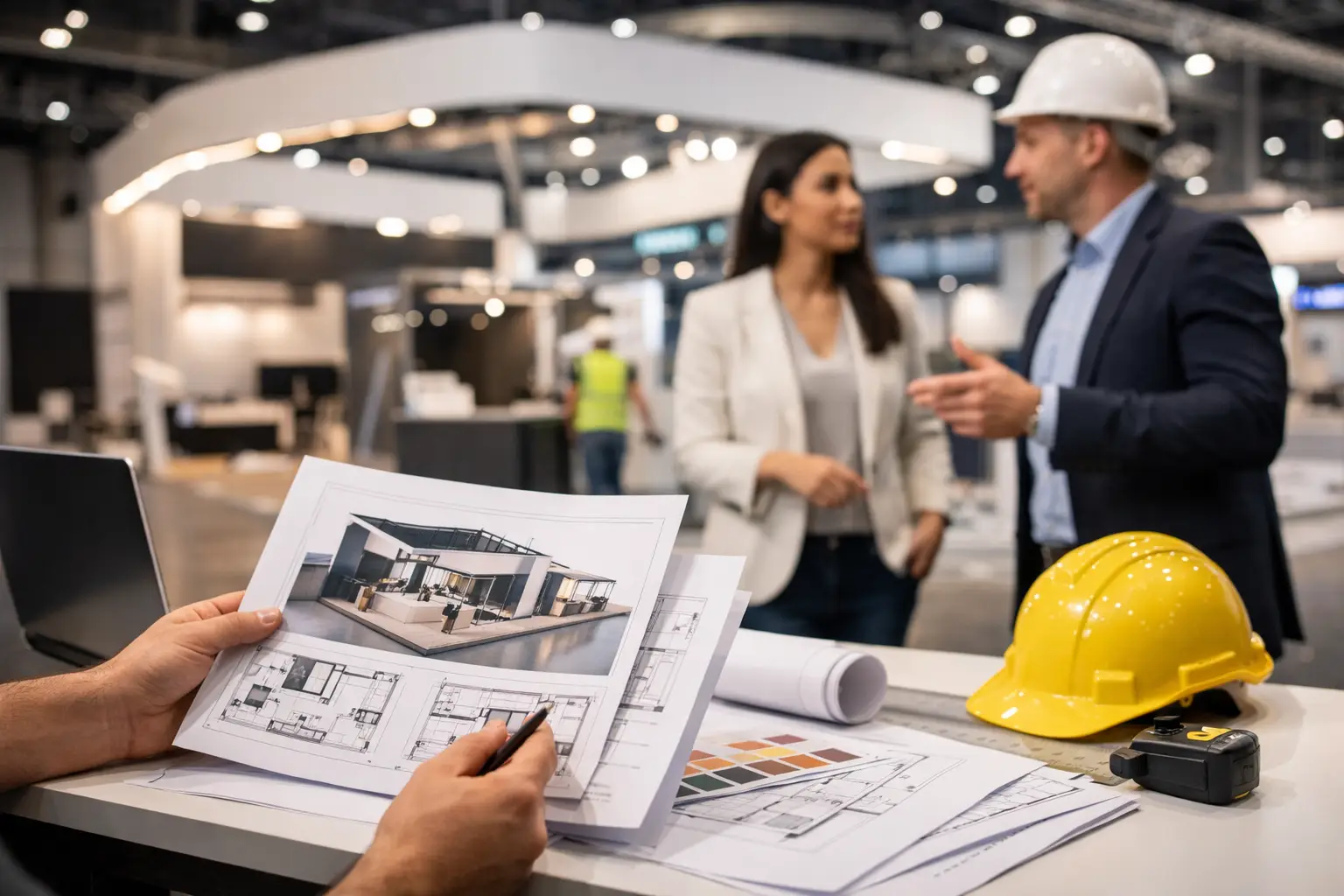
A good-looking stand is only one part of the job. In Germany, exhibition success depends on whether the contractor can handle design development, technical drawings, fabrication quality, venue coordination, transport planning, installation schedules, and dismantling without creating risk for your team.
That matters because many exhibitors underestimate the gap between concept and execution. A render can look impressive, but if the structure is hard to assemble, misses venue rules, creates power planning issues, or does not support product display and visitor flow, the stand will underperform. A dependable contractor closes that gap early.
For marketing teams, that means fewer surprises and better brand consistency. For procurement teams, it means clearer budgeting and stronger control over scope. For business owners and exporters, it means the stand does its real job – attracting the right audience, supporting sales conversations, and presenting the company as established and credible.
Why Germany is different from other exhibition markets
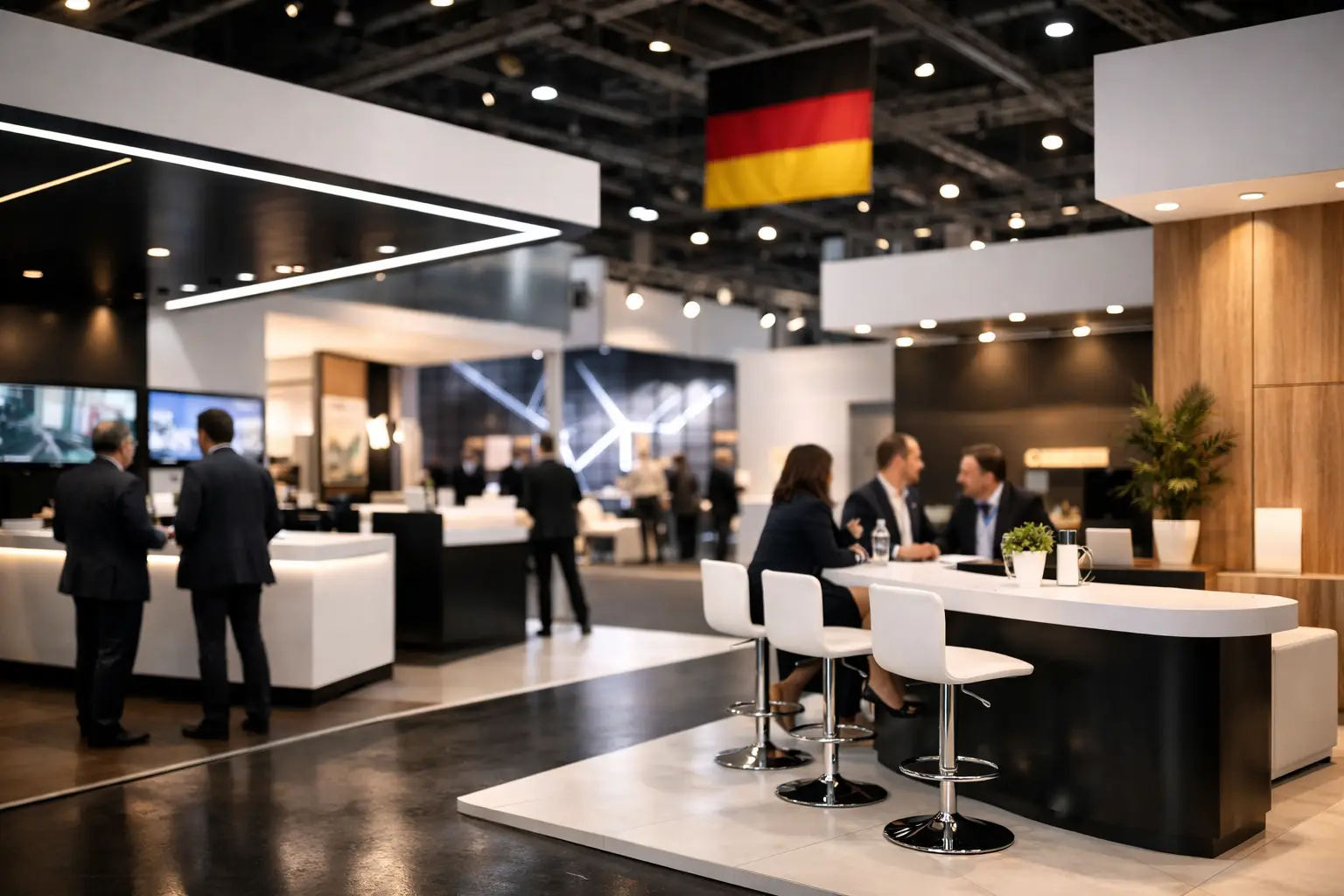
Germany hosts some of the most important trade fairs in manufacturing, automotive, pharma, technology, energy, and industrial supply. Expectations are high. Visitor traffic is serious, decision-makers often arrive prepared, and exhibitors are judged against strong international competition.
That changes the brief. In some markets, a visually bold stand can compensate for minor planning gaps. In Germany, buyers, organizers, and venue teams tend to notice details. Build quality, material finish, lighting balance, messaging clarity, meeting space practicality, and punctual handover all matter.
There is also a structural difference. Large halls, strict build windows, formal venue processes, and technical requirements mean your contractor must be operationally strong, not just creative. This is where experience becomes visible. The right partner knows when to push design ambition and when to simplify for speed, budget, or compliance.
Choosing an exhibition stand contractor for Germany based on business goals
The right stand depends on what you need the event to achieve. A company launching a new industrial product may need demonstration zones, storage, bilingual graphics, and private meeting areas. A government body planning a country pavilion has a different challenge – multi-brand representation, hospitality, circulation, and a unified visual identity. A startup may need a smaller footprint with premium finishing so it looks established without overspending.
This is why one-size-fits-all proposals usually fall short. A serious contractor begins with objectives, not square footage. Are you generating leads, supporting distributors, running product demos, hosting meetings, or building market confidence? The stand should reflect that priority from the first design concept.
Budget also needs honest discussion. Bigger is not always better. In Germany, a well-planned mid-sized stand with sharp branding, smart lighting, and strong visitor movement can outperform a larger booth that feels cluttered or generic. Good contractors help clients spend where impact is highest and cut what does not improve results.
What to assess before you appoint a contractor
Portfolio matters, but how you read it matters more. Do not look only for dramatic visuals. Look for range. Can the contractor handle custom stands, double decker builds, country pavilions, and projects above and below 100 square meters? Do the finishes look consistent? Do the stands appear built for specific business needs, or do they all feel like variations of the same idea?
You should also ask how much is controlled in-house. A contractor with internal design, production, and project management usually has tighter quality control and faster response times than one heavily dependent on fragmented outsourcing. That becomes especially important when artwork changes late, venue instructions shift, or shipping timelines tighten.
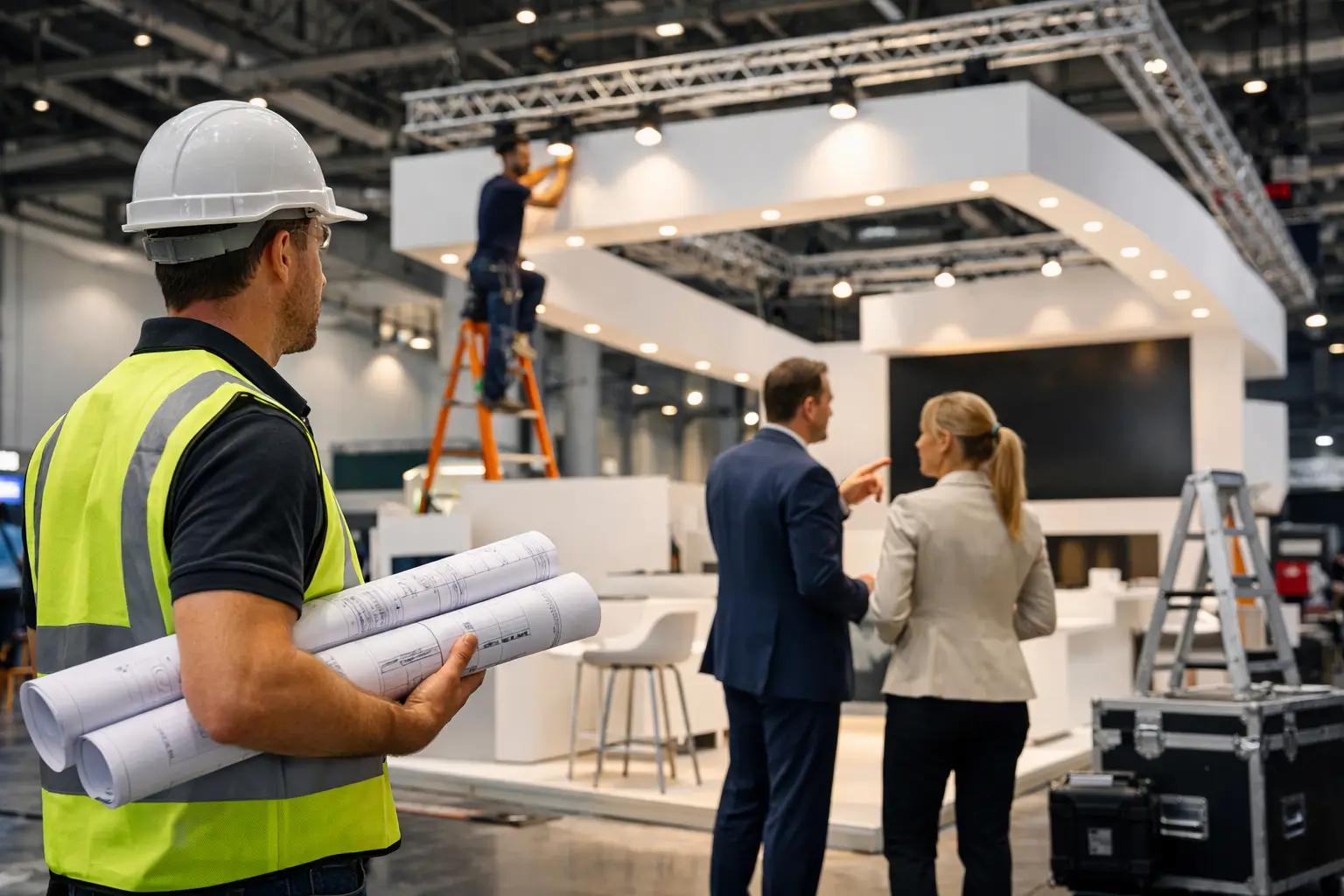
On-site capability is another deciding factor. Germany is not the place to discover your contractor is great in presentations but weak in execution. You need a team that can manage installation calmly, solve last-minute technical issues, and hand over the stand ready for business, not still being adjusted when visitors arrive.
Design that works in German trade fair environments
Strong exhibition design in Germany tends to be confident rather than noisy. That does not mean conservative. It means purposeful. Visitors should understand who you are, what you offer, and where to engage within moments of approaching the stand.
That usually calls for clean architecture, disciplined brand graphics, product-first storytelling, and lighting that highlights key zones without overwhelming the space. Meeting rooms need to be private enough for real conversations. Open areas should invite entry rather than create visual barriers. Storage must be planned so operational clutter never reaches the public-facing side of the booth.
If your product is technical, clarity becomes even more important. Screens, LED walls, samples, models, and demo counters should support the conversation, not compete with it. A good contractor understands how to turn marketing objectives into spatial decisions.
The logistics and compliance side clients often overlook
This is where many exhibition projects become expensive. Shipping schedules, hall access rules, electrical requirements, rigging approvals, flooring specifications, health and safety compliance, and dismantling coordination all affect the final outcome. If these are treated as afterthoughts, even a strong design can become a stressful build.
An experienced contractor builds these realities into the project plan from the start. That includes technical documentation, production sequencing, packing logic, installation planning, and contingency thinking. It also includes practical questions clients do not always ask early enough: How will samples be stored? Who manages on-site modifications? What happens if approvals change? How are fragile elements protected in transit?
For international exhibitors, local familiarity matters. A contractor that understands how German exhibition processes work can help prevent delays, miscommunication, and cost overruns. That operational discipline is often the difference between a stand that merely exists and one that performs properly from opening hour.
Cost, value, and where cheaper quotes can go wrong
Price matters. It should. But low quotes in exhibition building often hide scope gaps, weaker materials, reduced supervision, or unrealistic logistics assumptions. What looks economical at proposal stage can become expensive once revisions, urgency charges, replacement graphics, or on-site fixes start stacking up.
A better way to compare contractors is to look at value across the full project. What is included in design development? Are fabrication, transport, installation, dismantling, and project management clearly defined? Is the proposed stand practical to build in the available venue window? Will the finish level support your brand positioning?
There are times when a lighter, modular approach makes financial sense, especially for repeat exhibitors or smaller spaces. There are other situations where a fully custom build is justified because the event carries strategic weight. The right choice depends on your objectives, event frequency, and expected return from the show.
Why end-to-end control makes a difference
When one partner manages concept design, fabrication, logistics, installation, and dismantling, communication gets simpler and accountability gets clearer. There is less room for blame-shifting between agencies, builders, and transport vendors. For busy marketing and procurement teams, that alone can remove a lot of friction.
It also improves consistency. Design intent survives more effectively when the people building the stand are closely connected to the people who designed it. Material choices, lighting details, structural decisions, and graphic execution are easier to control when the process is not split across too many disconnected suppliers.
This is one reason experienced exhibitors prefer full-service partners. Companies such as LemonTree Exhibitions build trust not just by producing attractive stands, but by managing the full path from 3D concept to final handover with commercial discipline.
What a successful partnership looks like
The best contractor relationships feel proactive. You are not chasing updates, clarifying basic details repeatedly, or discovering new costs late. Instead, the team asks the right questions early, flags trade-offs clearly, and keeps the project moving with confidence.
That kind of partnership is especially valuable in Germany, where exhibitions are high-stakes and the standard is unforgiving. A strong contractor will challenge weak assumptions, refine your layout based on visitor behavior, and help you make decisions that improve both presentation and practicality.
If you are evaluating an exhibition stand contractor for Germany, look beyond the render. Look for a partner that combines design ambition with execution control, understands the realities of German trade fairs, and treats your event as a business outcome rather than a one-off build. The stand should do more than look finished – it should make your team feel ready the moment the hall opens.
The best time to protect exhibition success is long before the show starts, when the right partner is still being chosen.