

At a busy trade show, you usually get a few seconds before a visitor decides whether to stop or keep walking. That is why custom exhibition stand design is not just about looking impressive. It is about shaping attention, guiding movement, supporting conversations, and giving your team a space that helps them sell.
For marketing managers, procurement teams, and business owners, the real question is not whether a custom stand looks better than a standard booth. It usually does. The better question is whether the design works hard enough to justify the investment. The answer depends on how well the stand aligns with your goals, your audience, and the realities of the event itself.
Why custom exhibition stand design matters
A custom stand gives you control. Control over first impressions, brand visibility, product storytelling, meeting space, technology integration, and visitor flow. In sectors like manufacturing, pharma, technology, energy, and FMCG, that control matters because your exhibition presence often needs to do more than attract casual foot traffic. It needs to support real business conversations.
A standard shell scheme can be enough for a small event or a tight budget. But if you are launching a product, meeting distributors, hosting key accounts, or representing a country pavilion or premium brand, a generic setup can limit what you are able to do. You may lack storage, private discussion areas, demo space, proper branding zones, or the visual scale needed to compete.
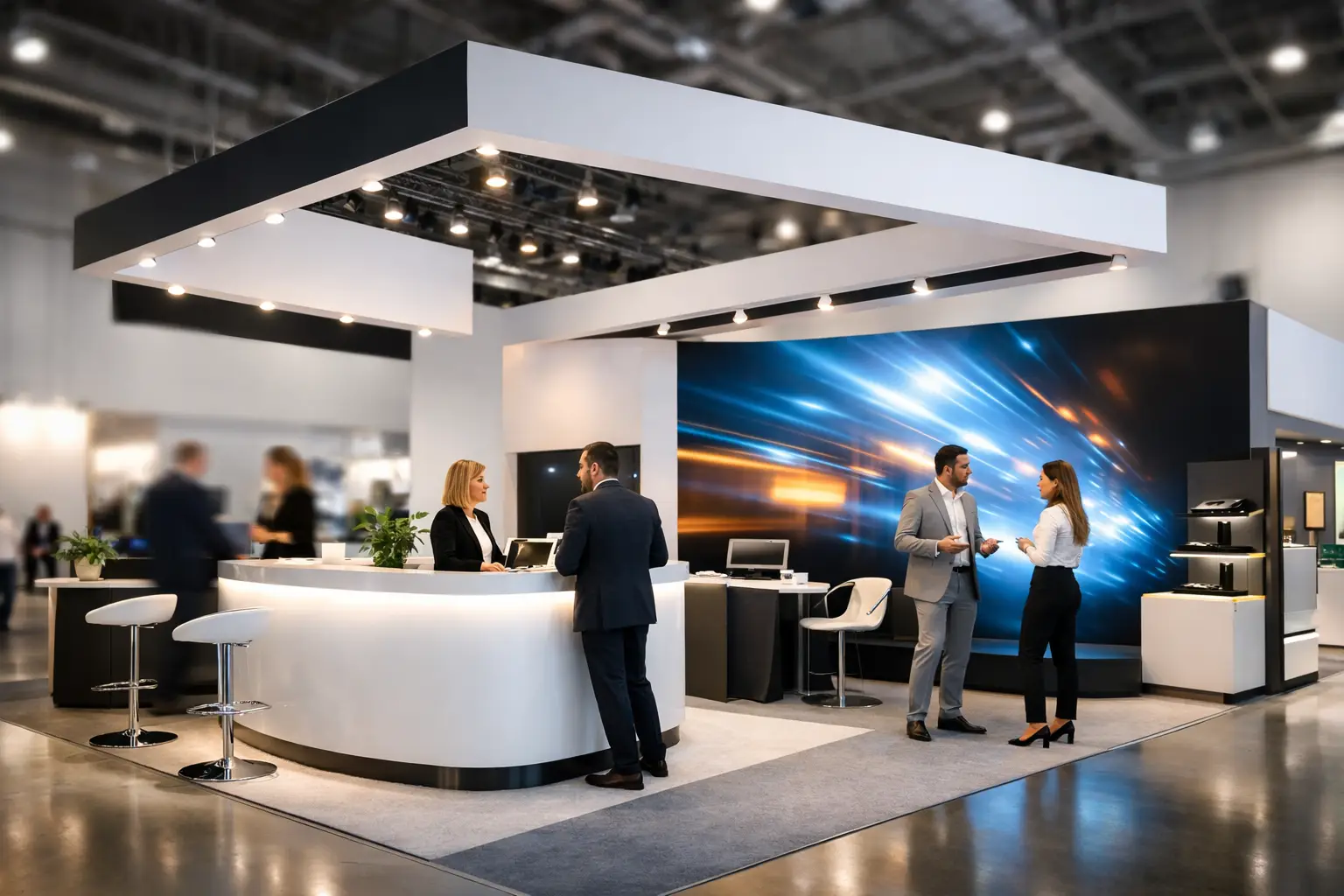
Custom exhibition stand design solves those constraints by building around your objectives instead of forcing your objectives into a fixed format. That does not automatically mean bigger is better. A smart 30 sqm stand with clear zoning and strong messaging can outperform a larger space that feels crowded or confused.
What makes a stand effective, not just attractive
Many stands photograph well and still underperform on the show floor. That usually happens when design decisions are driven by appearance alone.
An effective stand starts with function. Who are you trying to attract? What do you want them to do when they arrive? How long should they stay? Do you need fast lead capture, product demonstration areas, hospitality space, or private meeting rooms? These questions affect everything from layout to lighting.
Good design also reflects how trade shows actually work. Visitors do not read everything. They scan. They notice height, lighting contrast, movement, open sightlines, and simple messages first. If your branding is too subtle, your key offer is buried, or your stand is visually dense, people move on.
That is why the most successful stands balance three things at once: visibility, usability, and brand character. Visibility gets you noticed. Usability keeps the space working for your team. Brand character makes the experience memorable.
The planning decisions that shape results
The quality of a stand is often decided long before fabrication starts. The strongest projects begin with commercial clarity.
Start with the event objective
Not every show deserves the same design strategy. A lead-generation event may need open access, demo stations, and quick conversation points. A premium industry show may require hospitality, enclosed meeting rooms, and more refined finishes. A government or trade body pavilion needs consistency across multiple exhibitors while still creating a strong national identity.
When the objective is clear, design choices become easier. Without that clarity, projects drift into subjective discussions about colors, shapes, and references that may look appealing but do not move the business forward.
Size matters, but layout matters more
Brands often focus on square footage first. Space is important, but layout has a bigger impact on performance. A poorly planned large stand can create dead zones, traffic bottlenecks, and awkward staffing positions. A well-planned mid-sized stand can create stronger engagement with less waste.
Open corners, visible entry points, smart product placement, and the right mix of public and private areas all improve how the space functions. If you expect serious buyer meetings, seating and acoustic comfort matter. If you expect high traffic, the design should avoid narrowing entry points or blocking visibility with oversized features.
Materials and finishes send signals
Visitors read materials quickly, even if they do not realize it. Clean fabrication, precise detailing, strong lighting, and well-finished surfaces signal credibility. For enterprise brands, that matters. A stand does not need to be extravagant, but it does need to feel intentional.
There is also a practical side. Premium finishes look great, but some are heavier, more fragile, or less reusable than others. The right choice depends on event frequency, transport requirements, build timelines, and whether parts of the stand will be repurposed for future shows.
Custom exhibition stand design and the full build process
The design itself is only one part of the outcome. Execution is where many exhibition projects either stay on track or become stressful.
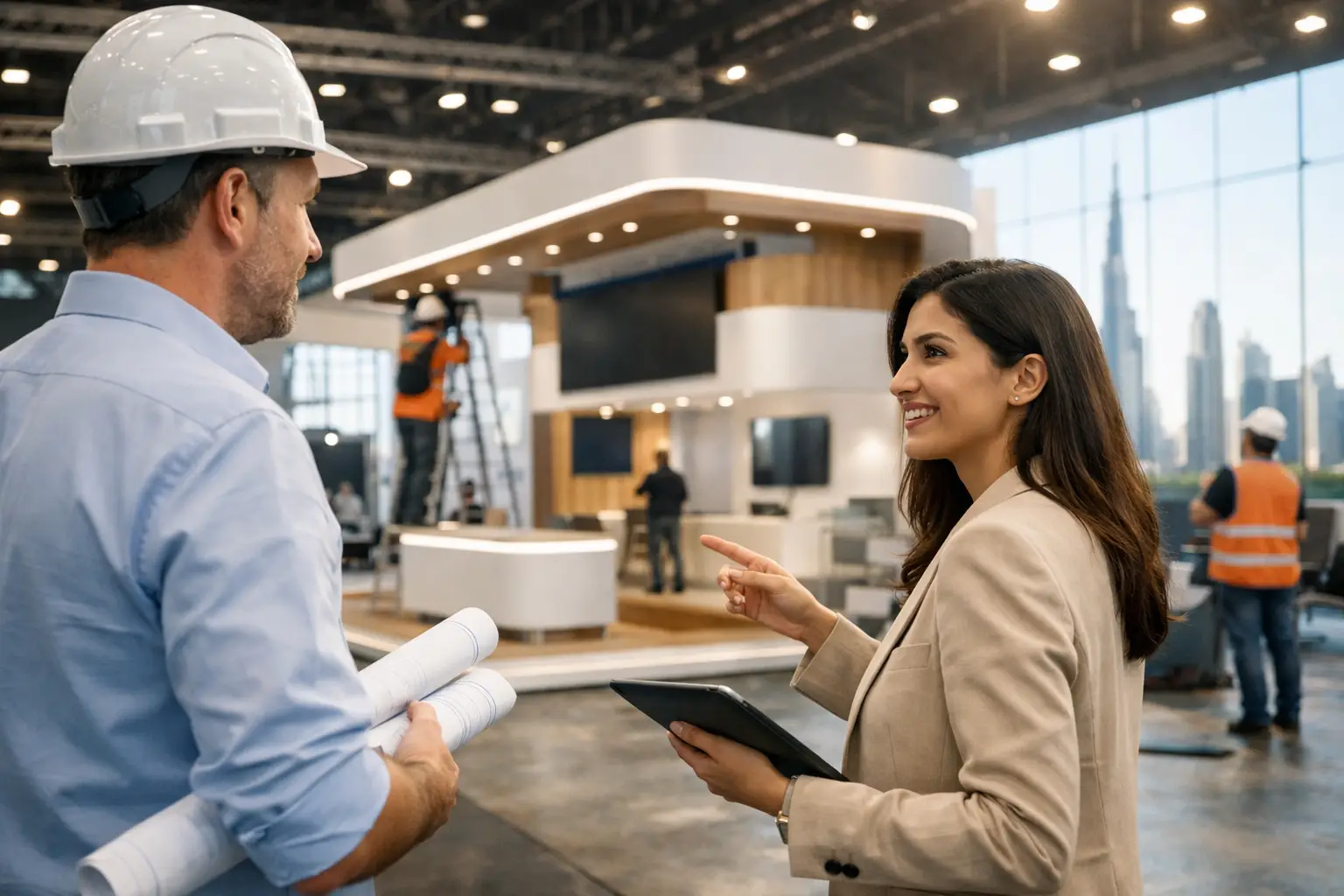
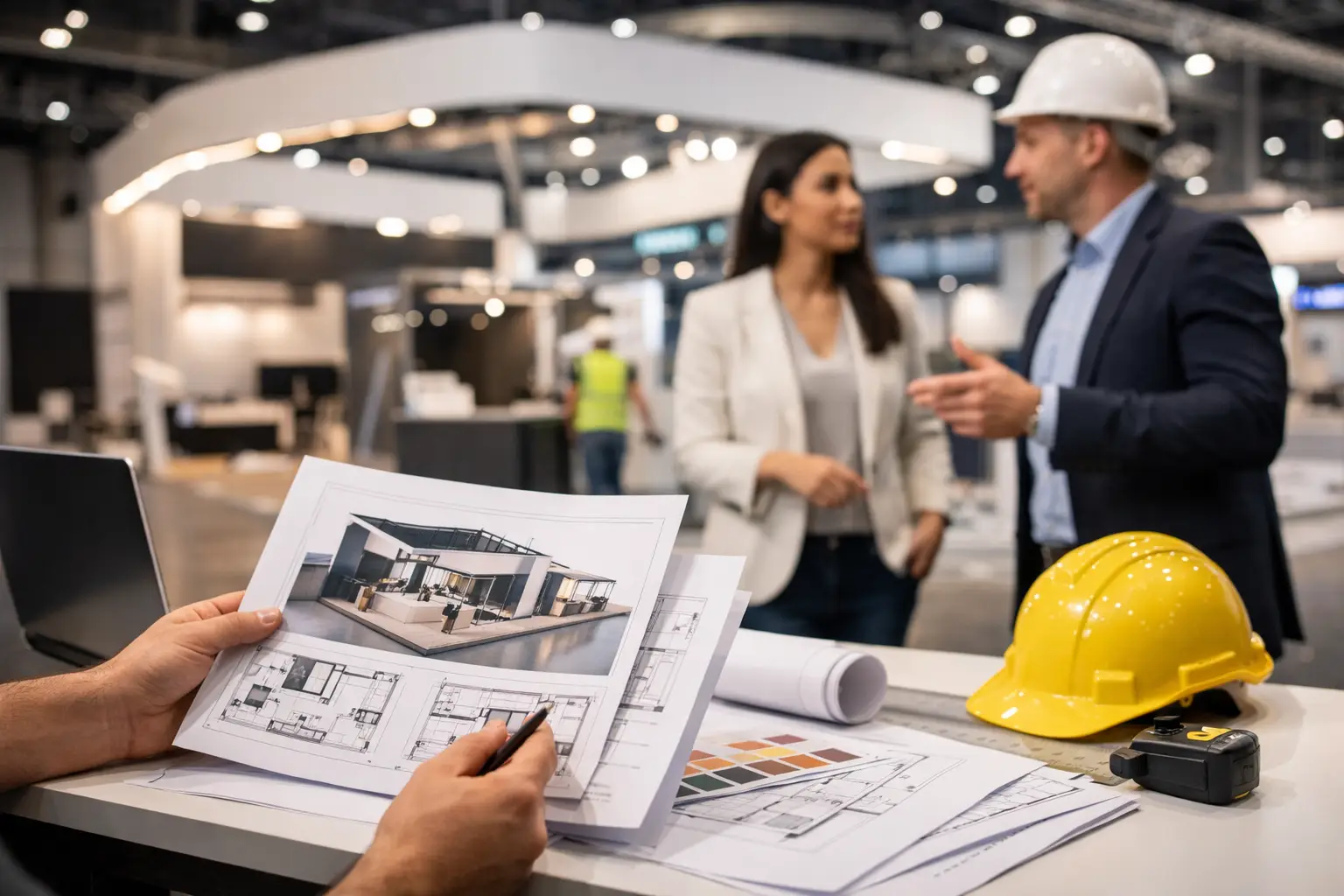
A strong custom build process should connect concept development, 3D visualization, technical drawings, fabrication, graphics production, logistics, installation, and dismantling. If these stages are fragmented across multiple vendors, the chances of delay, budget creep, and on-site compromise increase.
That is why many experienced exhibitors prefer a partner that manages the work end to end. It creates tighter quality control and faster problem-solving. If a lighting detail needs adjusting, a structure requires engineering review, or a graphic panel must be replaced close to the show date, coordination is simpler when the design and build teams are working as one unit.
This is especially relevant for international exhibitors. Building for major events in places such as Dubai, Riyadh, Mumbai, Las Vegas, or Chicago can involve venue regulations, freight timing, labor scheduling, and country-specific compliance requirements. Creative thinking matters, but operational discipline matters just as much.
Budgeting for impact without overspending
One of the most common mistakes in custom stand projects is spending heavily on visual features while underfunding the elements that support real engagement.
A larger LED wall, for example, may help attract attention, but only if the content is strong and the rest of the stand still functions well. A double decker structure can create presence and add meeting capacity, but it is not the right choice for every exhibitor or every venue. More complexity can increase both cost and risk.
The better approach is to prioritize based on purpose. Spend where it changes performance. That may mean stronger branding visibility, better lighting, smarter product displays, private meeting areas, or more durable materials that reduce costs over multiple shows.
Reuse should also be part of the budget conversation. Modular elements, repurposed structures, and recyclable materials can improve long-term value without making the stand feel generic. For brands with active event calendars, this can significantly improve return on investment.
Common problems a good stand design prevents
The best exhibition environments do not just create opportunities. They remove friction.
A well-planned stand helps prevent overcrowding at the entrance, poor lead handling, weak product presentation, limited storage, and uncomfortable meeting conditions. It also helps your staff work better. If your team has nowhere to store materials, no place to reset between meetings, or poor visibility across the space, performance drops.
This is where detail matters. Power access, screen placement, hospitality flow, back-of-house storage, flooring transitions, and graphic legibility all affect the visitor experience. These may seem like secondary issues in early concept discussions, but on the show floor they become very noticeable.
LemonTree Exhibitions has built its reputation on getting these details right while still delivering strong visual impact. That combination matters because clients do not need a stand that is only creative. They need one that arrives on time, fits the budget, complies with venue requirements, and supports results during the event.
How to judge whether your stand is working
Too many exhibitors measure success by appearance alone. A better standard is performance.
Ask whether the stand attracted the right people, supported meaningful conversations, helped your team work efficiently, and reinforced the level of quality your brand promises. Look at lead quality, meeting volume, dwell time, product engagement, and post-show feedback from both staff and visitors.
Sometimes the most successful stand is not the one with the boldest architecture. It is the one that makes interactions easier and leaves no doubt about who you are and why your company matters.
That is the real value of custom exhibition stand design. When it is done well, it does not simply fill a footprint at an event. It gives your brand a working environment built for attention, trust, and commercial momentum.
If you are planning your next show, the smartest starting point is not asking what the stand should look like. It is asking what the stand needs to achieve, because good design follows that answer.