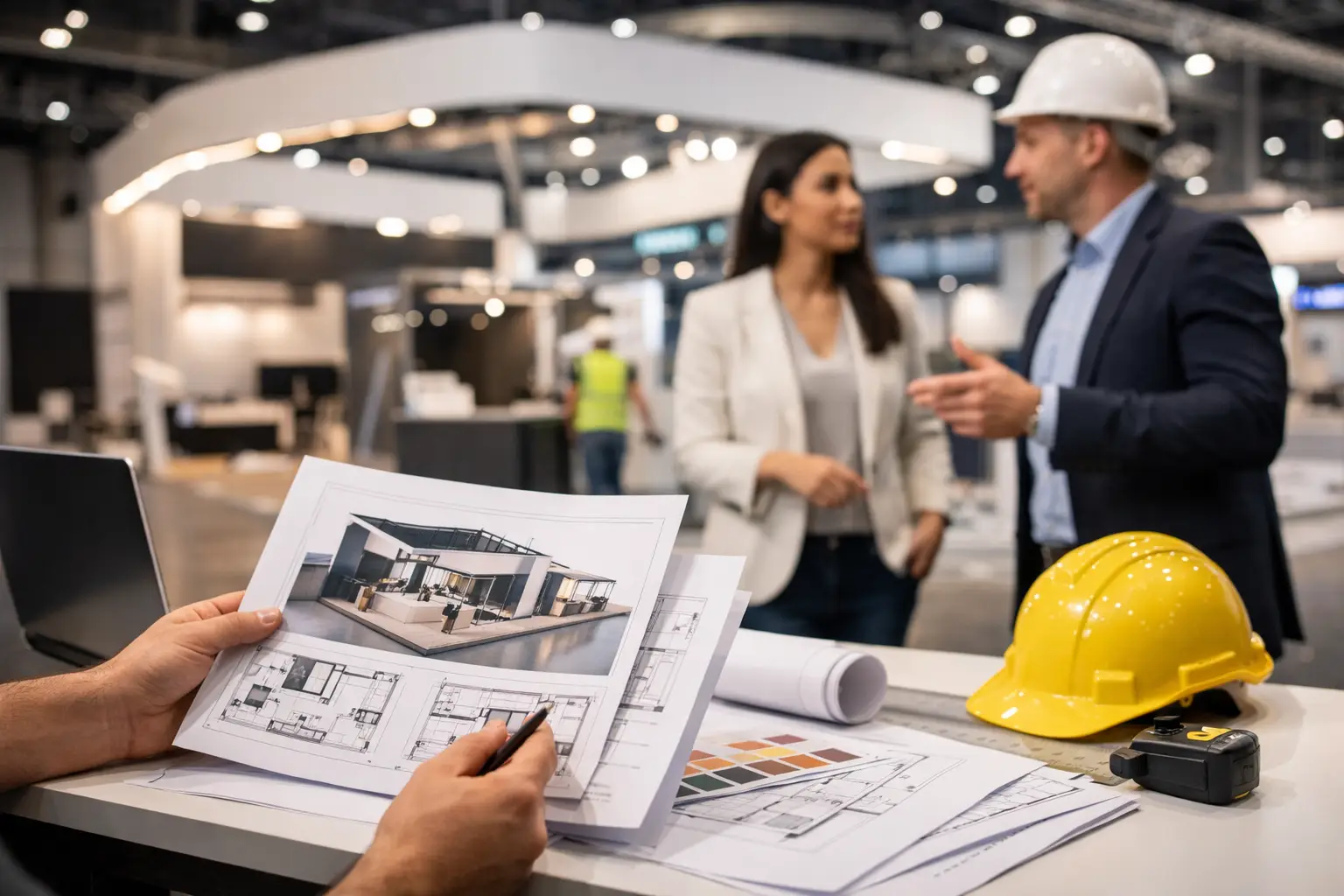



A missed approval, a delayed graphic file, or one unclear vendor handoff can turn a strong exhibition plan into an expensive scramble. That is why an exhibition project management checklist is not just an internal planning document. It is the tool that keeps your stand build, brand presentation, team coordination, and event outcomes moving in the same direction.
For marketing teams, procurement leads, and business owners, the challenge is rarely just designing an attractive booth. The real pressure sits in the details – deadlines, approvals, compliance, logistics, staffing, AV coordination, installation windows, and budget control. The best exhibition projects succeed because the visible result is backed by disciplined execution.
What an exhibition project management checklist should actually do
A useful checklist does more than remind your team to book the space or print brochures. It should help you control risk, clarify ownership, and surface issues early enough to fix them without paying rush charges or compromising quality.
That matters even more for larger custom stands, double decker builds, and country pavilions, where multiple workstreams run in parallel. Design development, structural approvals, fabrication, freight movement, venue paperwork, and on-site installation all depend on one another. If one slips, the rest feel it.
A good checklist also forces better commercial decisions. Sometimes a bold feature is worth the investment because it supports product demonstrations and footfall. Sometimes it is smarter to simplify a structural element and put that budget into LED content, hospitality, or lead capture. Project management is where creative ambition meets operational reality.
The exhibition project management checklist by phase
1. Define the objective before design begins
Start with the reason you are exhibiting. If your team is unclear on the objective, every later decision becomes harder. A product launch booth, a distributor acquisition stand, and a government pavilion should not be planned the same way.
At this stage, confirm your target audience, key messages, budget range, event dates, booth size, and required outcomes. Decide whether success will be measured through qualified leads, meetings booked, product demos, channel partner conversations, press exposure, or brand visibility. That early alignment prevents a common problem – a stand that looks impressive but does not support the commercial goal.
You should also identify internal decision-makers from the start. Marketing may lead the project, but legal, procurement, product teams, regional sales heads, and senior management often need visibility. If approvals are likely to involve several stakeholders, build that into the timeline immediately.
2. Lock the scope and working timeline
Once the objective is clear, turn it into a working scope. This includes the stand type, required zones, technology needs, meeting spaces, storage, hospitality, product display requirements, and any special structural or compliance needs.
Then map a realistic timeline backward from the show date. Include concept approval, design revisions, technical drawing sign-off, organizer submissions, production, graphics finalization, shipping, site build, and handover. It is easy to underestimate how long approvals take on the client side. In many projects, internal review cycles create more delay than fabrication itself.
A practical timeline should also identify hard deadlines versus preferred deadlines. If a branding change happens late, you may still update graphics. If a structural drawing misses submission cut-off, you may face fines, rework, or outright rejection.
3. Build the right stand around visitor behavior
Design should reflect how people will move, stop, engage, and remember your brand. That means your checklist needs to cover more than layout approval. It should test whether the stand supports open access, clear sightlines, visible branding, lead conversations, and product storytelling.
For some exhibitors, a highly open plan drives traffic. For others, especially in B2B sectors like pharma, energy, or manufacturing, semi-private meeting zones matter more. Neither approach is automatically better. It depends on the event, the audience, and the sales process.
Make sure your checklist covers 3D concept approval, materials selection, structural feasibility, branding placement, lighting intent, screen placement, furniture, and storage. If you are showing machinery or product samples, confirm dimensions, power loads, rigging requirements, and floor loading early. These points are easy to miss and expensive to fix on site.
4. Get approvals and compliance under control
This is where many exhibition projects drift into avoidable chaos. Organizer manuals often include rules for stand height, suspended elements, electrical submissions, double deck approvals, fire ratings, and build schedules. Your checklist should capture every submission requirement and assign an owner for each one.
Do not assume that because a design is approved internally, it is ready for venue submission. Technical drawings, MEP details, risk assessments, and material certifications may be required separately. International events can add another layer, especially when local venue standards differ from what your team is used to.
If multiple vendors are involved, this phase needs tighter coordination. One party may be handling graphics, another AV, another structural build, and another freight. Without one point of control, gaps appear quickly. That is one reason many exhibitors prefer end-to-end delivery – fewer handoffs usually mean fewer surprises.
Budget control is part of the checklist, not a separate exercise
An exhibition budget should be monitored throughout the project, not only approved at the beginning. Costs shift as the design evolves, venue rules change, or late additions appear. Your checklist should track estimated versus approved spending across stand build, graphics, AV, furniture, logistics, staffing, organizer services, and contingency.
This is also where trade-offs need honest discussion. Premium finishes, complex lighting, and integrated LED walls can create real impact, but only if they support the event strategy. If the team is working with a fixed budget, prioritize the elements that affect audience experience most directly.
A disciplined project team will flag cost implications as decisions are made, not after production starts. That protects both the timeline and the relationship.
The exhibition project management checklist for production and logistics
5. Finalize production files without ambiguity
Before fabrication starts, confirm that all approved drawings, artwork files, dimensions, materials, and quantities are current. Version control matters more than people think. One outdated artwork file can lead to reprints, delays, and visible inconsistencies on the floor.
Your checklist should include final graphic sign-off, file specifications, print proofing, branding verification, and content approval for screens. If multilingual messaging is involved, assign responsibility for language review. Small text errors become very public at trade shows.
6. Coordinate shipping, site access, and installation
Even the best stand concept fails if the materials do not arrive in the right sequence. Logistics planning should cover packing lists, freight timelines, customs documents where needed, move-in windows, labor access, lifting equipment, and on-site contact details.
This phase is especially critical for exhibitors participating across regions or managing back-to-back events. A project may be creatively strong and still suffer if there is no clear site schedule. Build teams need enough time for installation, testing, cleaning, and snag correction before handover.
Experienced exhibition partners plan for contingencies here. Delayed freight, venue restrictions, or last-minute service desk issues are not unusual. What matters is whether the project has enough control built in to absorb them.
7. Prepare the people, not just the stand
A polished booth with an unprepared team will underperform. Your checklist should cover staffing schedules, exhibitor badges, briefing notes, lead capture tools, product training, meeting calendars, dress code, hospitality planning, and escalation contacts.
This matters because the visitor experience is shaped as much by team readiness as by design. If staff do not know where to greet, how to qualify leads, or how to direct visitors through the stand, the physical environment cannot do its job.
For larger booths, define roles clearly. Who manages VIP meetings? Who handles media or partner visits? Who replenishes literature? Who owns technical support? Good project management removes ambiguity before show day starts.
Show-day control and post-show follow-through
Once the event opens, the checklist should shift from build management to performance management. Walk the stand before opening. Test screens, lighting, storage access, charging points, hospitality supplies, and cleaning. Confirm that the team has the daily schedule and key contact numbers.
During the show, track what is actually happening. Are product demos attracting the right audience? Is the meeting area overbooked? Is traffic strong but lead quality weak? A well-managed exhibition project allows for small adjustments in real time.
After the event, the checklist should not end with dismantling. Review lead counts, meeting outcomes, staff feedback, material recovery, storage, reuse opportunities, and final cost reconciliation. This is where future ROI improves. The most effective exhibitors treat each event as a live learning cycle, not a one-off build.
For companies exhibiting regularly at large-format shows such as GITEX, ADIPEC, Gulfood, or The Big 5, that discipline compounds quickly. Teams get faster, budgets get smarter, and stand strategy gets sharper with every cycle.
A strong exhibition presence is never the result of design alone. It comes from clear decisions, tight coordination, and a team that respects deadlines as much as visual impact. If your checklist can keep all three aligned, you are already ahead of most exhibitors on the floor.